








Continuing the “My Best Mistakes” series of blog posts . . . .
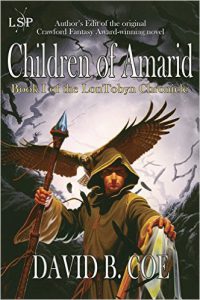 Very early in my career, when my first book, Children of Amarid, was the only one I had out, I responded publicly to a online review from a less-than-delighted reader. Amazon was still a novelty (no pun intended) as was the notion of online reader reviews. (Hard to imagine, right? That the idea of readers offering reviews of the books they’d read should have been new and different and even a bit odd?) I don’t remember what the reader in question objected to about the book, nor do I remember what I said in my public response. The original book is out of print now — only the 2016 reissues are available on the site, so our exchange is lost to the ages. All I know is that someone criticized the book, I didn’t take the criticism well, and I took it upon myself to write a reply and post it to the Children of Amarid Amazon page.
But that’s not quite what this post is about.
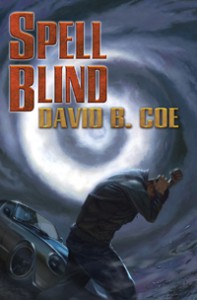 Some years later, soon after the release of Spell Blind, the first book in The Case Files of Justis Fearsson, another Amazon reviewer panned the book because my book was “a blatant rip-off” of Jim Butcher’s Harry Dresden books, “a ludicrous case of copycatting.” For the record, I didn’t copy Dresden at all. I had only read the first two books of the series, and the “copycatting” the reviewer claimed I’d done amounted to using tropes of the genre, not elements of Butcher’s work. And so I responded to the review, wanting to set the record straight.
But that’s not quite what this post is about.
At this point, you might have sensed that I have a problem. There are writers out there, I know, who couldn’t care less about bad reviews of any sort. Clearly I am not one of them. It’s not that I’m thin-skinned. Well, not really. If people don’t like my books, so be it. I write for me, because I understand that we can never please every reader. Even if ninety-nine readers out of a hundred love our book, there will always be that one reader for whom something just doesn’t work — the characters or the setting or the magic or the prose. Something.
My problem, and I know I am not alone in this regard, is that I can get all those nice reviews, but the one on which I’ll fixate, the one I’ll remember, is the lone bad one. I think it’s tied to imposter syndrome, and to every other insecurity I have as a writer. And as I say, I know I’m not the only professional who is like this. Certainly, when I see a review that misrepresents my work, or impugns my professional integrity, I can’t help but obsess over it a little. That’s what happened with both of the examples I’ve already cited.
That’s what happened with another book in another series, which was reviewed in a fairly high profile publication. As it happens, this third review was mostly positive. The reviewer liked the book. But they also said something about the book, a mild criticism, that I felt was simply untrue. I didn’t respond publicly. I sent the author of the review a private message, thanking them for their kind words about the book, but pointing out that they had gotten it wrong in this one regard.
Why did I do this?
Because I’m an idiot. Because despite my protestations before, I AM thin-skinned about my books. I take editorial feedback really well, but I respond terribly to public criticisms that I feel are unjust or inaccurate. To my mind, reviewers — professional reviewers, those who merely comment on bookseller sites, and all in between — ought to keep in mind that their words can have an impact on people’s livelihoods. If they have legitimate criticisms, so be it. But they need to take care to get their facts straight. Okay, off my soap-box.
Where was I? Oh, right. I sent a private message to the reviewer. I never heard back from this person. But they reviewed my next book, and they took their revenge. Publicly. Brutally. Cruelly. Their review of that next book was one of the most humiliating things that has ever happened to me in my career. It was unfair. It was relentless. It misrepresented the book. The review left me heartbroken, because I loved the book. Still do. And I am certain this review came about as a direct result of that message I sent after the first review. It was my fault. True, the reviewer didn’t have to take their revenge in the way they did, but still, I should have known better.
Because writers are told again and again never to respond to reviews. Most people will tell writers that they shouldn’t even read their reviews. Clearly, I have struggled throughout my career to follow both these bits of advice. In fairness, I have finally gotten better about all of this. I do not respond to reviews anymore. I rarely read them. But as mistakes go, this was a big one, and it is one I’ve made too often.
Don’t do what I did. Write your book and move on to the next. Promote the hell out of every publication. Pay attention to your sales numbers. Don’t worry about your reviews. Don’t go to your Amazon pages and scroll through the ratings. If you have to read your journal reviews, so be it. Who am I to criticize? But don’t obsess over them. Don’t fixate on the negative phrases. And for God’s sake, don’t respond to them.
And if you can do all that, you’re a better person than I am.
Keep writing.
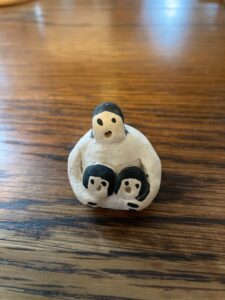 During our tour, we encountered many people selling pottery in front of their homes. And at one table, a mother displayed her wares beside those of her young daughter. I think the girl must have been around 7 or 8, give or take a year, and she had made a few small bowls, seed pots, and dishes. And she had made a tiny storyteller. As one would expect, it was quite crude compared to those we had seen for sale back in Albuquerque (we hadn’t yet been to Santa Fe or Taos), but something about the figure spoke to me. Maybe is was just that the storyteller was so cute. Or maybe it was that the girl herself was so proud of it. Or maybe I saw in this child’s early effort to follow in her mother’s footsteps something akin to my dream of becoming a professional writer. Whatever the reason, I asked the girl how much it cost.
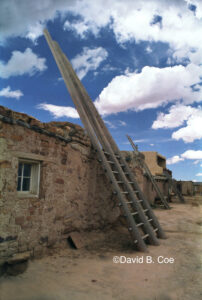 That was a magical day in many ways. Acoma was as beautiful as we had been told, the pale red stone of the Pueblo seeming to glow beneath a deep azure sky, wooden kiva ladders rising above their structures and reaching toward the clouds. At one point, I spotted a rainbow in the clouds overhead — there was no rain, just the prismatic color, which appeared for a moment and then vanished. I think I was the only one on the tour who saw it. I believed that, together, the rainbow and my little storyteller were omens, signs that my dream would, in fact, come to pass.
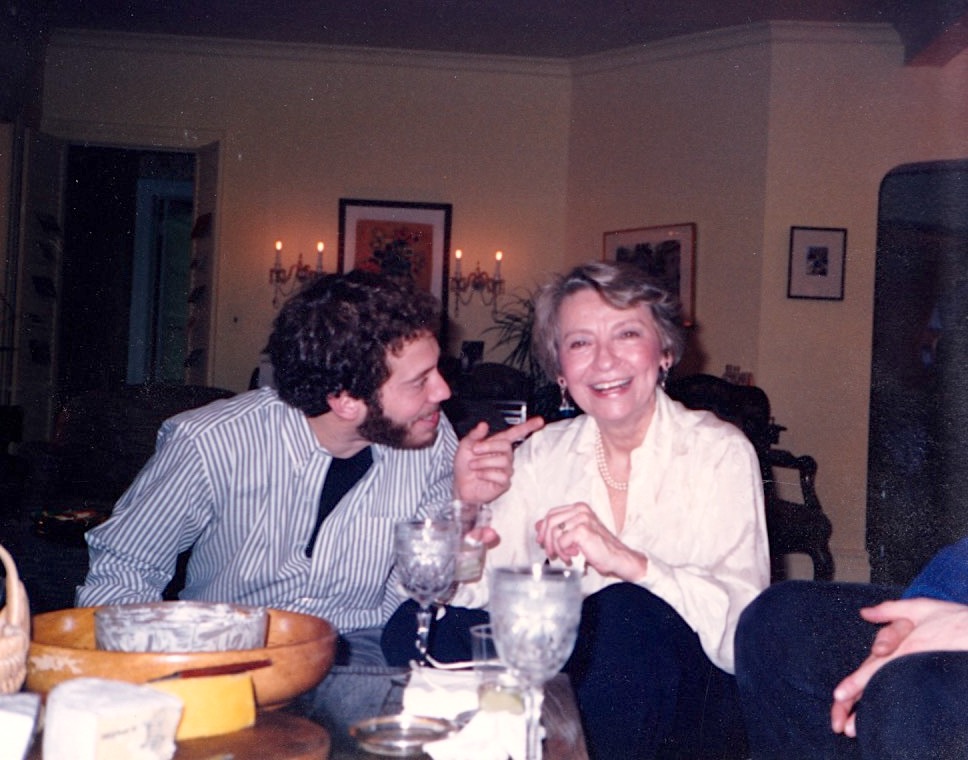 Yesterday would have been my mother’s birthday — her 101st. I’ve written about her, and my dad, quit a bit in this space, though I haven’t written about my mother in a couple of years. She was smart and funny, classy and beautiful, quietly ambitious and deeply accomplished. She doted on her children and was, in turn, doted on by my father. She loved to travel and was passionate to the point of reverence about literature and the arts.
 We built our house in 1998. Or, to be more accurate, we paid other people to build our house in 1998. We took a pre-made design that we found in a book of house floor-plans, and with some help from a local architect, customized it to meet our needs. At the time, our older daughter was three and Nancy was pregnant with our younger daughter. We needed a kid-friendly home that would give the girls space to play, and us room to watch them but also cook dinner and such.
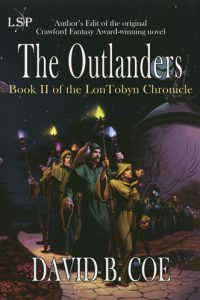 The first deadline I missed was on my second novel, The Outlanders, the middle book of the LonTobyn Chronicles trilogy. And I had good excuses. Between the time I started writing the book, and the day the first draft of the manuscript was due to Tor, our first child was born, my mother died, my father died, and my siblings and I had to settle my father’s estate.
 Yes, sometimes we think we’re going to miss a deadline, and then we make it. And if we alert our publisher prematurely, we could lose our spot in the queue. So be it. That’s the price of acting professionally. When our older daughter first was diagnosed with cancer, I told my editor and my agent what had happened, and let them know I was probably going to be late with the novel I was writing. As it turned out, writing that book — Invasives, the second Radiants novel — was a wonderful escape, and I met my deadline. But I had given up my publishing spot and so the book was released later than I had hoped. It wasn’t that big a deal. As I say, the most important thing is be up front about the situation with those who need to know.
 My “What matters?” series of posts will conclude next Monday, after a Monday Musings post this week that straddled the personal and professional a bit more than usual. In the meantime, I am using today’s Professional Wednesday post to begin pivoting toward the impending release of my new series, a contemporary urban fantasy that delves deeply into Celtic mythology. The series is called The Chalice War, and the first book is The Chalice War: Stone. It will be released within the next month or so, and will be followed soon after by the second book, The Chalice War: Cauldron, and the finale, The Chalice War: Sword.
 I finished the book and showed it to my agent. She liked it a lot, but thought it needed work. She was right, of course. But by that time, I had signed the contracts for Robin Hood and the Thieftaker books. Not too long after, I finally sold the Fearsson series to Baen Books and so had that trilogy to get through.
 But I never forgot my Celtic urban fantasy, or its heroes Marti and Kel. When I had some spare time, I went back and rewrote the book, incorporating revision notes from friends and from my agent with my own sense of what the book needed. I rewrote it a second time a couple of years later, and having some time, started work on a second volume, this one set in Australia (where my family and I lived in 2005-2006). I stalled out on that book about two-thirds of the way in, but I liked what I had. By then, though, I was deeply involved with the final Thieftaker books and the Fearsson series. And I was starting to have some ideas for what would become the Islevale trilogy.