








Say you don’t need no diamond rings,
And I’ll be satisfied;
Tell me that you want the kind of things,
That money just can’t buy.
— John Lennon and Paul McCartney
We were bound to get to money eventually, right? For weeks now, I’ve been writing about the things that matter and those that don’t. It seemed inevitable that I would come to financial issues before long. And here we are.
Let me start with a spoiler. I am not going to tell you that money is unimportant, that what matters is what’s in your heart, what brings you joy. I’m not going to tell you to throw off the bonds of our Capitalist mindset and devote yourself entirely to your art. Money matters. You can’t eat what’s in your heart. You can’t use your art to keep warm and dry and safe. You can’t retire on dreams and professional contentment. Call it a necessary evil. Call it a source of comfort and pleasure. Call it whatever the hell you want. But don’t kid yourself: In this world, we all need money to get by.
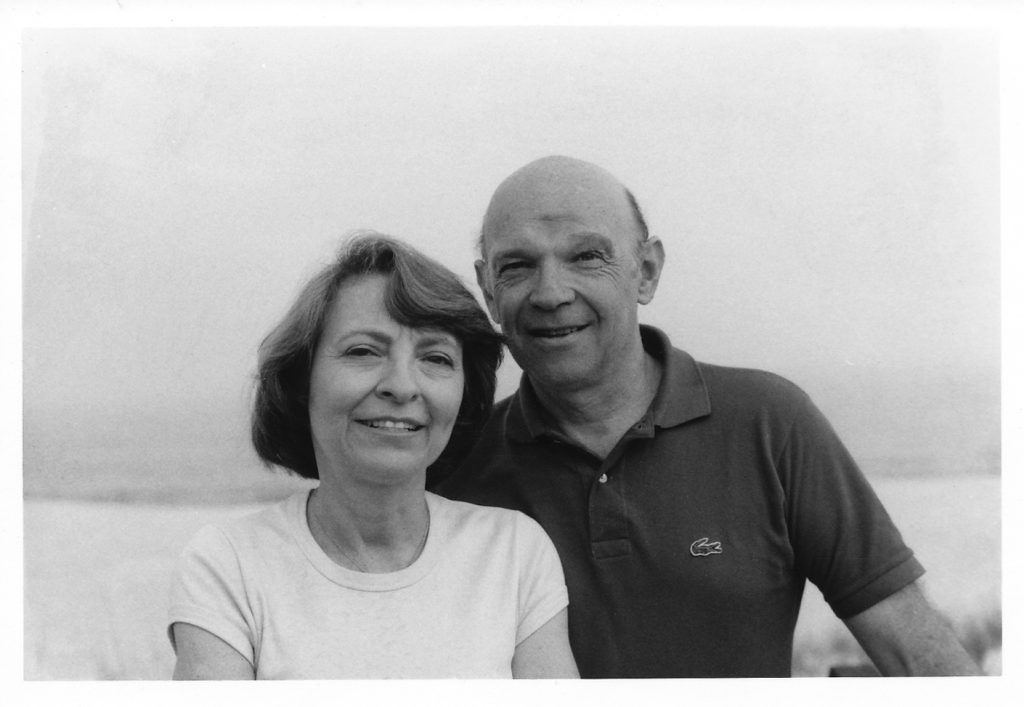
My father struggled early in his professional life, at a time when my older siblings were kids, and he worried about finances quite a bit. Those worries contributed to an authoritarian streak in his parenting. Later, by the time I was growing up, he had established himself in the world of finance and was earning a healthy living. We weren’t truly wealthy — we had family friends who were, so we saw the lifestyle of the rich up close — but we were comfortably upper-middle-class. In my memory, we never worried about money. My dad was far more easy-going in those later years. When unexpected expenses arose, he would shrug and say, “It’s only money.” Which, of course, is an attitude born of privilege.
My brother Jim tells of going with my father to his office in lower Manhattan when Jim was just a kid. My father showed Jim where he worked and said something along the lines of, “I could have been one of those guys with a corner office and a lot of money, but I chose to be a husband and father instead.” That’s a paraphrasing, but a close one, and it is indicative of my dad’s priorities. Again, though, it’s also something one can only say from a place of comfort.
I’ve been rich, oh baby, I’ve been poor;
Been in love a couple of times before.
If I had to choose, you know, between the two,
I’d take both rich and in love; I ain’t no fool.
— Paul Barrere, Little Feat
My father’s example has guided me for much of my life. Yes, I want my books to sell. I want to make money as a writer, and I take advantage of opportunities as they come my way. But when my daughters were younger, I tried to prioritize family in choices between home life and profession. And I have always worked hard to make my books as clean and polished as possible, even when I’ve known that I might make more if I took less time on each project and squeezed out more publications every year.
As a result, I have enjoyed more critical success than commercial success, and at times, my sales performance has bothered me. Once, when I was lamenting another well-reviewed book that hadn’t sold very well, Nancy asked me, “Would you want it to be the other way around?”
The question brought me up short. “What?”
“Would you be happier if your sales were great, but your reviews were bad?”
It took me all of three seconds to answer. “No, I wouldn’t.”
“Then stop complaining.”
Wise woman.
At this point, you might be saying, “You know, for a guy who said he wouldn’t tell us money is unimportant, you sure seem to be telling us just that.”
To which I say, “Well, yes and no.”
Money matters, no doubt. I would like to be making more as a writer, and I’ve felt that way for much of my career. But money is not all that matters. Not by a long shot. For each of us there exists a balance — things we will do for a paycheck and things we won’t. I have the luxury of making choices that are similar to those my father made. Nancy earns a good living and she wants me to write with joy, with satisfaction in my work, and with respect for the boundaries we have placed between our professional lives and our private life. An approach born of privilege? Absolutely. And so I would never judge anyone who makes different choices, who emphasizes the commercial end of the profession. We all have to do what is right for ourselves, for our loved ones, for our goals and desires.
This is a Monday Musings post, but these closing graphs have the feel of a Professional Wednesday essay, and so allow me to offer a few bits of business advice. First, do not rush into any contract or business arrangement. Most of the people I have encountered in publishing are honest and care deeply about the written word. Most, but not all. Read your contracts before you sign, and ask questions, not just of the person you’re signing with, but of friends who know the law and the business. If you have any doubts about any provisions, don’t sign until those questions have been answered to your satisfaction.
Second, don’t give up your day job until you’re absolutely certain you can. I gave mine up many years ago, and so I am not really in a position to give such advice. The fact is, though, had I know as much then about the vicissitudes of the market as I know now, I might have followed a different course. This despite the fact that Nancy and I have never really wanted for much or had to worry about finances.
And third, remember that once your words are out there, there’s no taking them back. Take pride in your books and stories. Make them as good as can be. Long after the money from a specific book or story sale has been spent, the work itself will still be available for readers. In my opinion, you want those words to represent the best you have to offer at the moment you published them.
They toss around your latest golden egg,
Speculation — well, who’s to know,
If the next one in the nest,
Will glitter for them so.
— Joni Mitchell
Have a great week.
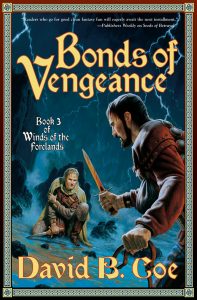
 What matters to me? Professionally, for this coming year, a few things. I have a series debuting in February. I want to promote the hell out of it. I want to feel at the end of the release windows — the weeks immediately preceding and following the releases of the three books — that I have done all I could to make the series successful. I also have an old series that I want to re-release. I’ve been talking about doing this for several years now, and each year I have found other projects to take up my time and energy. But this series, Winds of the Forelands, is one about which I am passionate. This is the year I bring it out again. It matters to me. And I want to start something new, a series that will take me in a new direction, I have resisted starting it for a couple of years, I believe because I am intimidated by the magnitude of what I’m taking on. It’s time to get over my hesitation.
 What about you? I’m not merely asking what you wish to accomplish, though obviously that’s part of the equation. I’m asking as well what you care about. Sure, maybe you want to be published — or at least contracted — by year’s end. That’s a laudable goal. But what project will get you there? What story is burning brightest inside you? What work will bring you joy? What project is most likely to tap into your greatest creative passion? That ought to be part of the equation as well.
 This will be brief. We have had our girls in for the holiday, though Winter Storm Elliott very nearly kept our younger daughter in Denver for the weekend. We have managed the cold and kept the house warm with fires in the fireplace and well-placed space heaters. We’ve enjoyed clam dip and cinnamon rolls, homemade soups and Indian-style butter salmon. We’ve even had a couple of meals out.
 So far, we have received some very good stories. We have also received far, far more that won’t make the first cut. And so I thought I would go over again, briefly, the things that can make or break a story submission, at least for this editor.
 Will I reject a story simply because it is single-spaced instead of double-spaced? No, I’m not quite that mean. But when reading a story, knowing I have literally dozens more waiting in the queue, I will only tolerate so many flaws before I reject it. Remember, I have 500 stories to choose from. I can and will find what I’m looking for. No story is ever perfect, so ask yourself, do you want to expend one of your flaws on formatting? Or do you want to present your story correctly so that I can judge it on its artistic merits? The answer seems self-evident to me.
 1) I abhor the cliché, but think outside the box. As
  “This is my present,” he said. “Watching all of you.”